


Intelligent route planning:
Save costs and CO 2 with the right software.
Why do I need route planning software for my logistics ?
Video: Route planning in 100 seconds.
Would you like to improve the efficiency of your dispatching and planning, increase the profitability of the fleet and reduce with your fleet CO2-emissions?
Using route planning software saves you time and money.
What is the potential of route optimisation?

Overview: Advantages of intelligent route planning.
How does TransIT optimise your route planning?
These advantages make TransIT the ideal software for route planning and route optimisation.
TransIT is simple.
TransIT is efficient and sustainable.
Because our applications are modular they can be adapted to your requirements at any time.
TransIT is future-proof.
Route optimisation with software:
How your company benefits.
These companies already benefit from
route optimisation through TransIT:






Route optimisation for many industries.
How does route planning work?
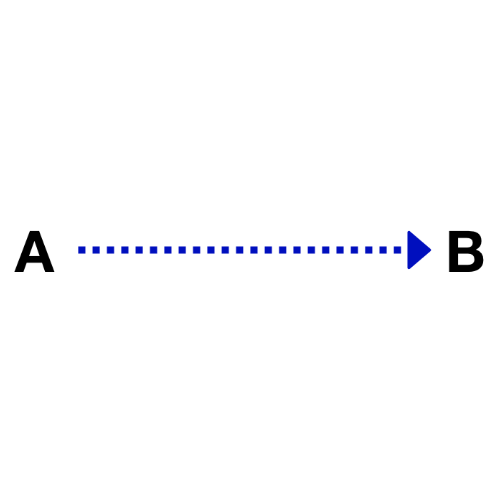
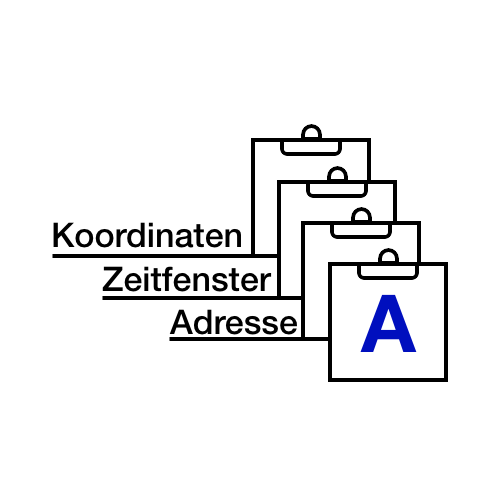

Simple practical example:
This is what the optimised route plan looks like.
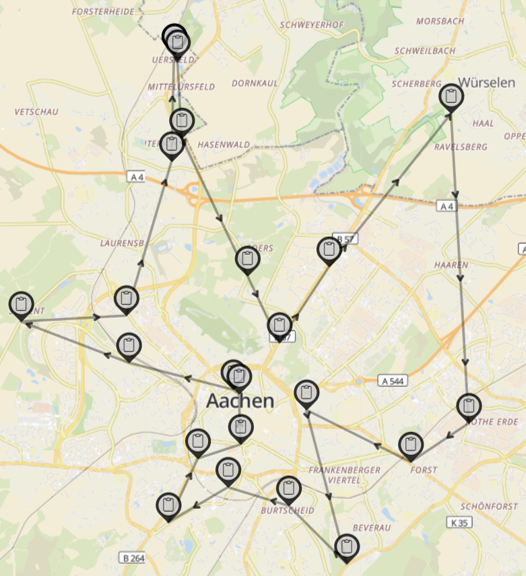
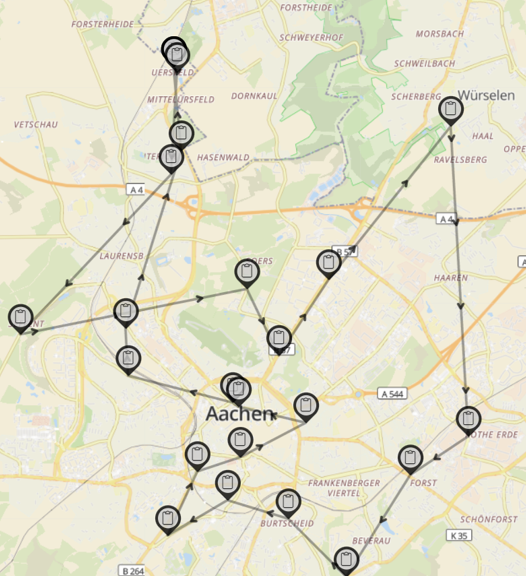
Using the TransIT software for route planning, you save 11 % distance, CO2 and time in this case.
Find out your potential
using the savings calculator.
Frequently asked questions (FAQs).
Digital route planning saves time in dispatching, lowers operating costs and reduces CO₂ emissions. Automated systems calculate optimal routes, take into account restrictions such as time windows, vehicle types or traffic volume – and respond flexibly to changes.
Logistics & Transport food delivery Recycling Technical field service Pharmacy and laboratory services Crafts and service businesses
Manual planning is done using Excel, maps or gut feeling – but it is prone to errors and time-consuming. Automatic route planning uses algorithms and artificial intelligence to calculate the best solution from millions of possibilities in seconds.
Strategic route planning: long-term (months/years) Objective: Define the basic structure of logistics – e.g. location selection, area divisions, depot planning, fleet composition usually based on simulation or optimisation models important for expansion, tenders or network adjustments
Operational route planning Daily/short-term planning of tours based on specific orders Objective: efficient and reliable processing, consideration of time slots, traffic conditions, order priorities, etc. usually done automatically using software like TransIT
Tactical vehicle routing medium term (e.g. weekly planning, rollouts) e.g. for recurring orders, weekly routes or seasonal adjustments